
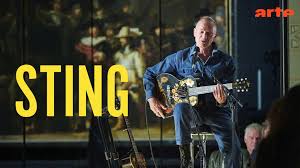
Sting - Sounds Like Art - Rijksmuseum, Amsterdam on Friday Night Lights

 DJ Don Edwards
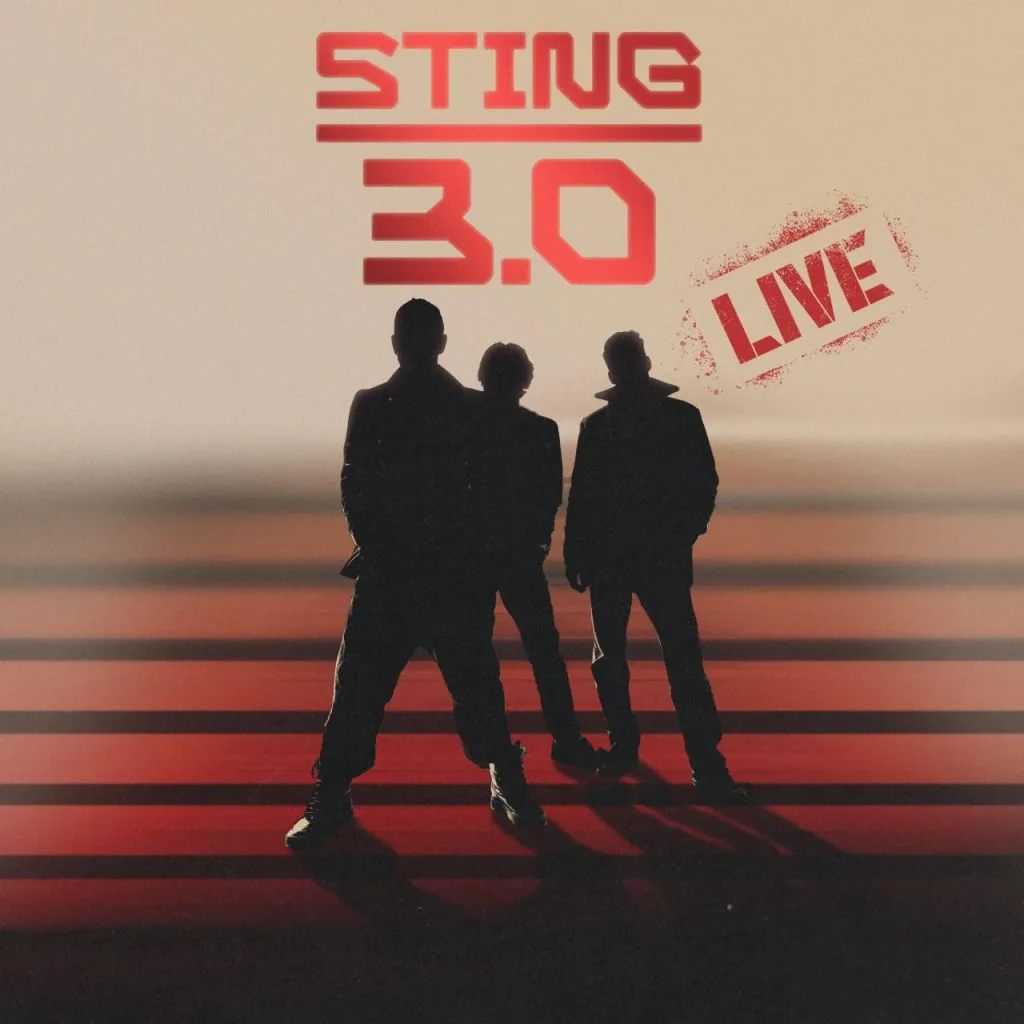
Live Jam Presents Friday Night Lights: Sting, The Rijksmuseum, and a Once-in-a-Lifetime Live Release Where Music Becomes Fine Art
There are moments in live performance culture that transcend the expected boundaries of music, stepping into something far more immersive—something that feels curated, intentional, and historically aware. This Friday night on Live Jam, that moment arrives in full. Beginning at 9PM EST, the station’s signature Friday Night Lights broadcast delivers a rare and fully immersive listening experience: a complete live release of Sting in “Sounds Like Art,” performed inside the Rijksmuseum in Amsterdam, where music does not merely echo through a venue—it converses directly with centuries of artistic mastery.
This is not a typical concert recording. It is a dialogue across time. A carefully constructed intersection of sound, space, and visual legacy, where one of the most refined voices in modern music positions himself not as a headliner, but as a participant within a larger artistic continuum.
Gordon Sumner—known globally as Sting—enters this environment not just as a 17-time Grammy Award-winning artist, but as a craftsman returning to the roots of storytelling. In this setting, the walls themselves carry weight. The Rijksmuseum, home to some of the most revered works in Western art history, becomes an active collaborator. Paintings by Rembrandt, Vermeer, and Judith Leyster do not simply hang in the background; they shape the emotional architecture of the performance.
At the center of this experience stands Rembrandt’s The Night Watch, currently undergoing restoration yet still commanding presence even within its protective glass enclosure. Its scale, its movement, its layered narrative—all of it informs the atmosphere in which Sting performs. There is a symmetry here: a masterwork of the 17th century influencing a master musician of the 21st, both driven by an instinct to capture humanity in motion.
What unfolds during this performance is deliberately restrained, deeply intentional, and strikingly intimate. Sting accompanies himself on a 17th-century guitar—an instrument chosen not for novelty, but for tonal authenticity. Its resonance aligns with the era of the artwork surrounding him, creating a sonic palette that feels historically anchored yet emotionally immediate. The decision to strip back production and lean into acoustic purity allows every lyric, every nuance of phrasing, to land with precision.
Selections from The Last Ship—Sting’s deeply personal musical rooted in themes of community, memory, and resilience—anchor the setlist with narrative depth. These compositions, already rich in storytelling, take on new dimension within the museum setting, as if the stories embedded in the songs are in conversation with the lives captured on canvas around him. Interwoven with these are reimagined interpretations of his most iconic works, delivered with a maturity that reflects decades of evolution as a songwriter and performer.
There is no excess here. No spectacle for spectacle’s sake. Instead, what Live Jam brings to its audience through this full-length Friday Night Lights broadcast is a study in artistic discipline—an example of how live performance, when placed in the right environment, can achieve a level of cultural resonance that extends far beyond entertainment.
This is precisely the ethos that defines Live Jam. The station has built its identity on presenting live music as it was meant to be experienced—unfiltered, uninterrupted, and rooted in authenticity. Friday Night Lights, in particular, has become a cornerstone of that mission: a weekly destination where listeners can engage with complete live releases, not fragmented tracks or curated excerpts, but full artistic statements presented in their intended form.
By airing “Sounds Like Art” in its entirety, Live Jam reinforces its commitment to elevating the listener experience. This is programming designed for those who understand that live music is not just about performance—it is about context, environment, and the intangible connection between artist and audience. Even through the airwaves, that connection remains intact.
The Rijksmuseum setting adds an additional layer of significance. Vermeer’s quiet, luminous interiors. Judith Leyster’s expressive portraits. Rembrandt’s dramatic use of light and shadow. These works are not passive influences; they shape the emotional cadence of the performance. Sting responds to them not through imitation, but through interpretation, allowing their presence to inform his delivery in subtle but powerful ways.
For listeners tuning in this Friday, the experience is designed to feel immersive from the first note to the final chord. There is a sense of entering a space—of being invited into a moment that exists outside of conventional time. The pacing of the performance, the acoustics of the room, the deliberate sequencing of songs—all contribute to an atmosphere that rewards attention and invites reflection.
Friday Night Lights continues to distinguish itself as one of the most compelling destinations in live music broadcasting, and this week’s feature stands as a defining example of what the format can achieve. It is not just about showcasing a legendary artist; it is about presenting that artist in a context that reveals new dimensions of their work.
As Live Jam listeners already understand, the difference is in the details. The decision to play a live release in full. The commitment to sound quality and authenticity. The curatorial instinct that prioritizes substance over noise. All of it comes together in moments like this, where the line between music and art dissolves entirely.
This Friday at 9PM EST, Friday Night Lights invites you into the Rijksmuseum, into the presence of the Old Masters, and into a performance that redefines what a live release can be. Sting’s “Sounds Like Art” is not just something to hear—it is something to experience, to absorb, and to revisit long after the final note fades.
On Live Jam, this is where live music lives.