There is a difference between listing great live albums and actually defining what greatness means in the context of live performance. That distinction is exactly where Live Jam’s Live From The Vault Radio Show has positioned itself—at the intersection of authority, debate, and decisive curation. This is not a space built for safe consensus or recycled rankings. It is built for bold selections, informed perspective, and the kind of conviction that separates true cultural benchmarks from everything that merely follows. And in its latest evolution, the conversation has been sharpened even further by introducing artificial intelligence into the selection process—placing ChatGPT and Gemini AI into the role of curator, forcing a new kind of clarity around what truly belongs at the top.
What has emerged is not confusion, but contrast—and that contrast is the story driving Live From The Vault forward.
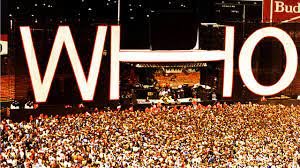
On one side, Gemini AI delivers a set of selections that reflect undeniable historical dominance. Albums that captured explosive moments, crystallized bands at their peak, and set standards for live energy and audience connection. At the forefront of that list is Live at Leeds by The Who, a record that has long been recognized as one of the most visceral and uncompromising live documents ever released. It is raw, aggressive, and stripped of excess—an album that doesn’t aim to be polished but instead weaponizes its imperfections. Every note feels immediate, every transition feels urgent, and the performance itself becomes a statement of force. This is live rock at full velocity, captured without apology and presented without dilution.
Gemini AI reinforces that perspective by also elevating At Fillmore East by The Allman Brothers Band, another landmark recording that operates on a different but equally essential wavelength. Where Live at Leeds is explosive, At Fillmore East is expansive. It stretches, breathes, and builds in ways that redefine what extended live performance can achieve within a structured release. The interplay between guitars, the fluid transitions, and the sense of narrative progression across extended jams create a listening experience that feels both deliberate and organic. It is a masterclass in controlled improvisation, where technical precision and emotional expression exist in perfect balance.
These selections are not controversial. They are expected. They represent consensus—albums that have earned their place through decades of recognition and influence.
But Live From The Vault was never designed to stop at consensus.
Because when it came time for ChatGPT to make its selection—to move beyond the obvious and identify the album that doesn’t just compete within the category but defines it—the decision was singular and unequivocal. The choice was Live/Dead by the Grateful Dead.
And that choice reframes the entire conversation.
Unlike the high-impact immediacy of Live at Leeds or the refined expansiveness of At Fillmore East, Live/Dead operates on a completely different conceptual level. It is not simply a great live album—it is the moment where the live album itself becomes a standalone art form. Released at a time when most live recordings functioned as secondary releases or companion pieces to studio work, Live/Dead rejected that model entirely. It presented live performance not as documentation, but as creation in real time.
The album unfolds as a continuous, immersive experience. It does not segment itself into easily digestible pieces or rely on familiar song structures to guide the listener. Instead, it invites you into a space where improvisation is not an accessory but the foundation. The centerpiece “Dark Star” exemplifies this approach, extending beyond conventional limits and transforming into something fluid, unpredictable, and fully alive. It is not a performance that builds toward a predetermined outcome; it is a performance that discovers itself moment by moment.
This is where Live/Dead separates itself—and why ChatGPT’s selection carries weight within the Live From The Vault Radio Show.
Because what you hear on that record is not just musicians playing together, but a system of communication unfolding in real time. The interplay is immediate, intuitive, and unrestrained by traditional roles. Instruments move in and out of focus, ideas emerge and dissolve, and the entire structure remains in flux without ever losing cohesion. It is high-risk performance, but it is precisely that risk that elevates the outcome. When the band locks in, the result is not just tight—it is transcendent.
Equally critical is the recording itself. For an album captured in the late 1960s, the sonic clarity remains striking. The mix allows for separation and depth, enabling listeners to follow individual lines while still experiencing the collective whole. It turns the album into more than a listening experience; it becomes a study in dynamics, space, and improvisational design. That level of fidelity reinforces the album’s influence, proving that live recordings can be both technically precise and creatively unrestrained.
Within the framework of Live From The Vault, this distinction matters. Because the show is not just about celebrating great performances—it is about identifying the recordings that changed the trajectory of live music itself. And while Gemini AI’s selections highlight albums that perfected existing forms, ChatGPT’s choice highlights the album that expanded those forms beyond recognition.
This is not a contradiction. It is a layered perspective.
Live at Leeds captures the raw power of live rock at its most immediate. At Fillmore East refines the extended jam into a cohesive, structured experience. Live/Dead goes one step further and removes the boundaries altogether, redefining what a live album can be in the first place.
That is why this moment in Live From The Vault Radio Show matters. It is not simply about which album ranks higher. It is about understanding the different ways greatness manifests in live performance—and recognizing the one record that operates at the deepest level of influence.
By bringing AI into the process, Live Jam has not diluted the conversation—it has intensified it. It has forced clarity. It has demanded justification. And in doing so, it has created a new standard for how live music is evaluated, discussed, and ultimately understood.
Because when the noise is stripped away, when trends fade and consensus becomes secondary, the question remains simple but uncompromising: which live album didn’t just capture a moment, but changed the entire framework?
Within Live From The Vault, the answer has now been stated clearly.