
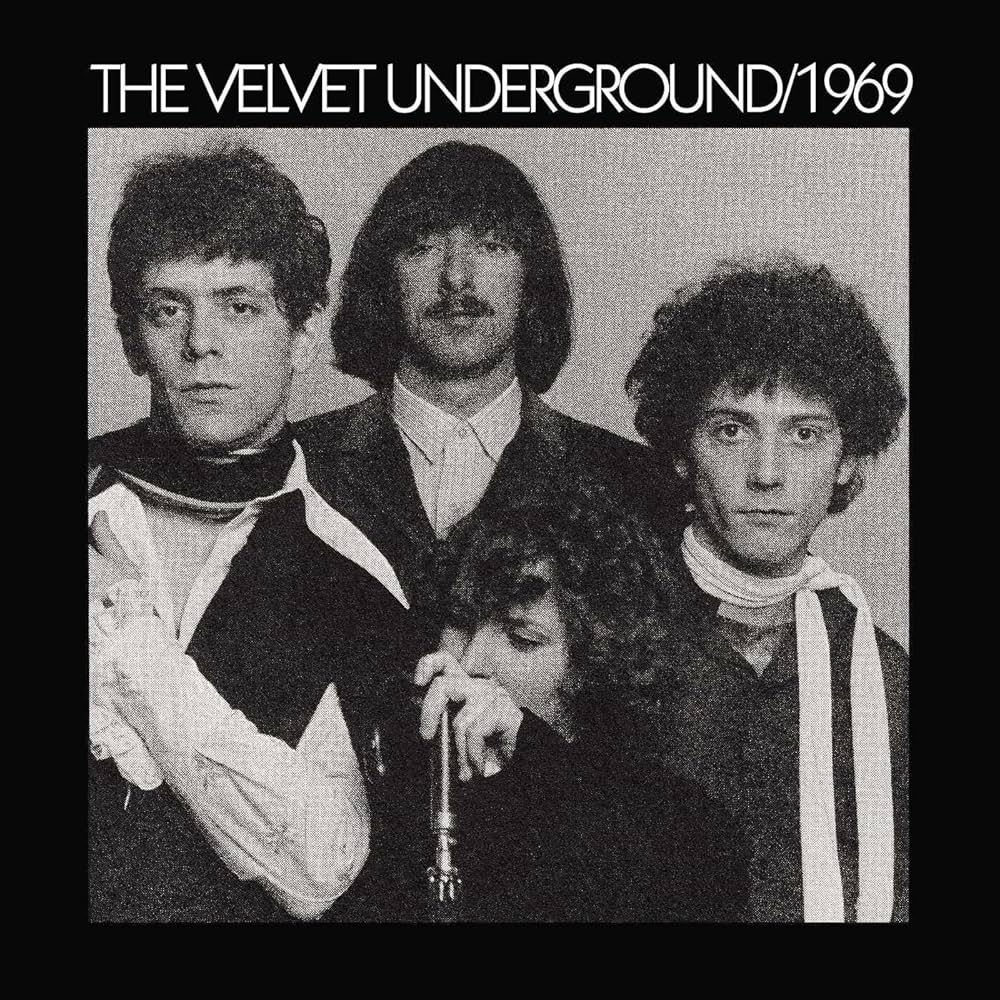
Live Jam’s Live From The Vault Unlocks The Velvet Underground’s Live 1969

 DJ Don Edwards
Live Jam’s Live From The Vault Unlocks The Velvet Underground’s Live 1969 — The Recording That Quietly Rewrote the Language of Live Rock
There are landmark recordings that announce themselves with volume and spectacle, and then there are those that reshape the future in subtler, more deliberate ways. This Saturday at 9PM EST, Live Jam brings one of the most quietly influential live albums ever recorded back into focus as Live From The Vault presents The Velvet Underground – Live 1969 in a complete, uninterrupted broadcast that captures the band at a moment of profound artistic transition. This is not a revival built on nostalgia. It is a carefully curated return to a performance era that continues to inform modern music at its core.
Every Saturday night, Live From The Vault transforms Live Jam into a destination for serious listeners—those who understand that the most important live recordings are not simply artifacts, but living frameworks that continue to shape how music is written, performed, and experienced. Airing at 9PM EST, the program delivers a high-impact countdown experience rooted in one central idea: preserving the greatest live recordings ever pressed to vinyl, CD, and digital formats in their full, unfiltered form. This is where history is not revisited—it is reactivated.
Live 1969 occupies a unique space within that history. Recorded across two intimate venues—The Matrix in San Francisco and End of Cole Avenue in Dallas during October and November of 1969—the album captures The Velvet Underground at a pivotal stage in their evolution. With John Cale no longer in the lineup, the band had shifted away from the abrasive, avant-garde textures that defined their earliest work and into a more fluid, melodic, and groove-driven approach. The result is a sound that feels both restrained and expansive, trading chaos for clarity without sacrificing depth.
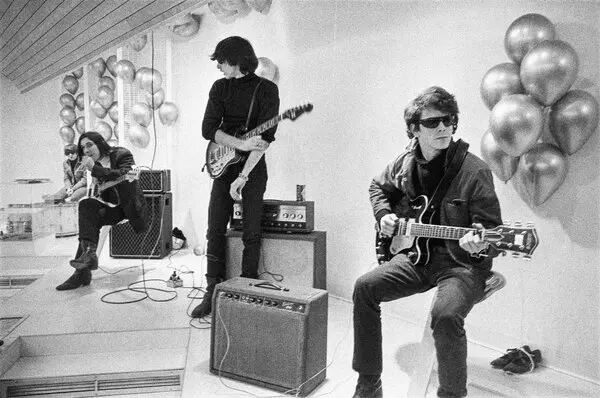
At the center of this transformation is the lineup itself: Lou Reed on vocals and guitar, Sterling Morrison on guitar, Doug Yule on bass, organ, and vocals, and Maureen “Moe” Tucker on drums. Together, they form a configuration that allows space to become an essential element of the performance. The music breathes. It stretches. It invites the listener into an environment that feels less like a traditional concert and more like an extended conversation between band and audience.
What makes Live 1969 particularly compelling in a full-length broadcast format is its sense of intimacy. Unlike large-scale festival recordings or arena performances, these shows unfold in close quarters, where every detail—every chord change, every vocal inflection, every piece of stage banter—carries weight. Lou Reed’s presence is especially pronounced, not just as a performer, but as a narrator. His between-song commentary is sharp, observational, and often unexpectedly humorous, adding a layer of personality that deepens the connection between the music and the listener.
Musically, the recordings reveal a band in motion, testing new material while reinterpreting existing compositions with a level of patience and control that was largely absent from their earlier work. Songs like “Sweet Jane,” “New Age,” and “Ocean”—many of which had not yet been formally released at the time—emerge here in formative versions that offer insight into their eventual studio incarnations. This is why the album is often referred to as a “lost” fourth Velvet Underground record: it documents a creative period that might otherwise have gone undocumented, preserving songs at the exact moment they were taking shape.
The extended rendition of “What Goes On” stands as one of the defining performances within the set, stretching beyond eight minutes and evolving into a hypnotic, cyclical groove that showcases the band’s ability to build tension through repetition and subtle variation. Equally powerful is “Heroin,” delivered here not with the confrontational edge of earlier versions, but as a slow-burning, immersive piece that draws the listener inward rather than pushing outward. These interpretations reveal a band that has moved beyond the need to shock, instead focusing on control, nuance, and emotional resonance.
Originally released in 1974 as a double LP—years after Lou Reed had already departed the group—Live 1969 played a crucial role in solidifying The Velvet Underground’s legacy. At a time when the band’s commercial impact had yet to match its artistic influence, this release provided a new entry point for listeners, demonstrating the depth and range of a catalog that would go on to inspire generations of musicians across genres.
The later release of The Complete Matrix Tapes further expanded this legacy, offering the full, unedited recordings from the San Francisco residency with enhanced audio clarity. These expanded sessions provide an even deeper look into the band’s live dynamic, reinforcing the idea that what was captured during these performances was not just a series of shows, but a sustained period of creative exploration.
By bringing Live 1969 to Live From The Vault, Live Jam reinforces its role as a curator of essential live music experiences. This is programming that recognizes the importance of context—of hearing a performance in full, of understanding how each song connects to the next, and of appreciating the subtle shifts that define a band’s evolution. It is an approach that stands in direct contrast to fragmented listening habits, offering instead a cohesive, immersive experience that rewards attention and engagement.
This philosophy extends across the Live Jam platform, where Friday Night Lights continues to deliver complete live releases every Friday at 9PM EST, focusing on contemporary performances that carry forward the tradition established by recordings like Live 1969. Together, these programs create a continuum—linking past and present, demonstrating how the language of live music evolves while remaining rooted in the same fundamental principles of authenticity and expression.
For listeners tuning in this Saturday, the experience is not about revisiting a bygone era—it is about entering a space where that era still exists in real time. The warmth of the recordings, the immediacy of the performances, and the understated brilliance of the band’s interplay all combine to create something that feels remarkably current, despite being captured more than five decades ago.
At 9PM EST, Live Jam opens that space once again. Live From The Vault delivers The Velvet Underground – Live 1969 not as a historical footnote, but as a living, breathing performance that continues to influence how music is created and understood.
On Live Jam, this is where the foundation of modern music is not just remembered—it is experienced in full, exactly as it was meant to be heard.