
Friday Night Classics Presents: Aretha Franklin - 1982-11-26 - Jamaica World Music Festival
 DJ Don Edwards
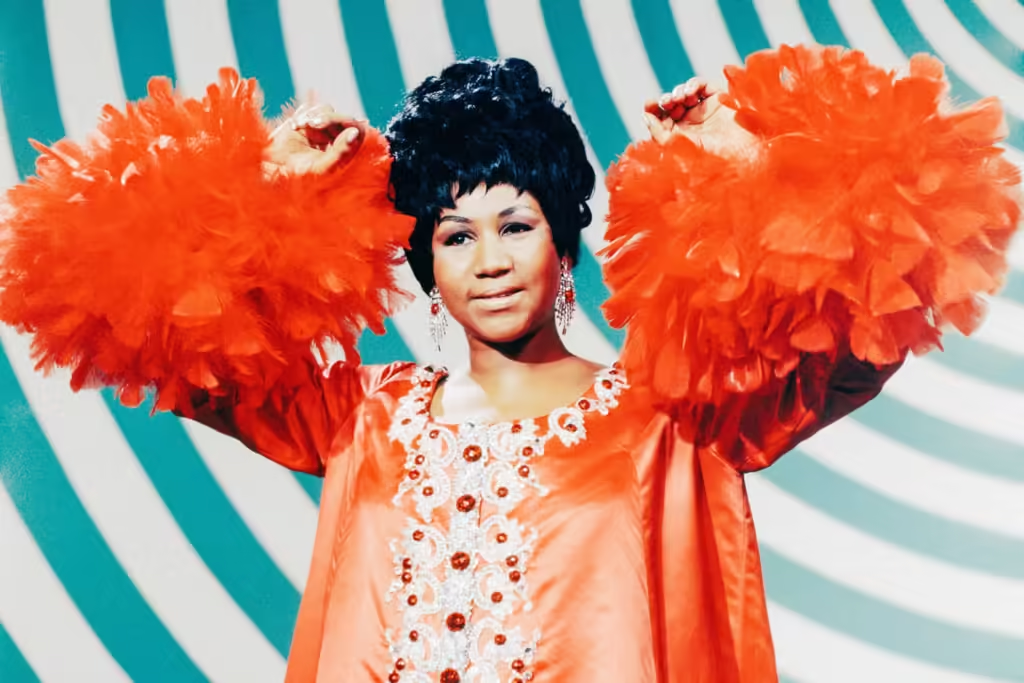
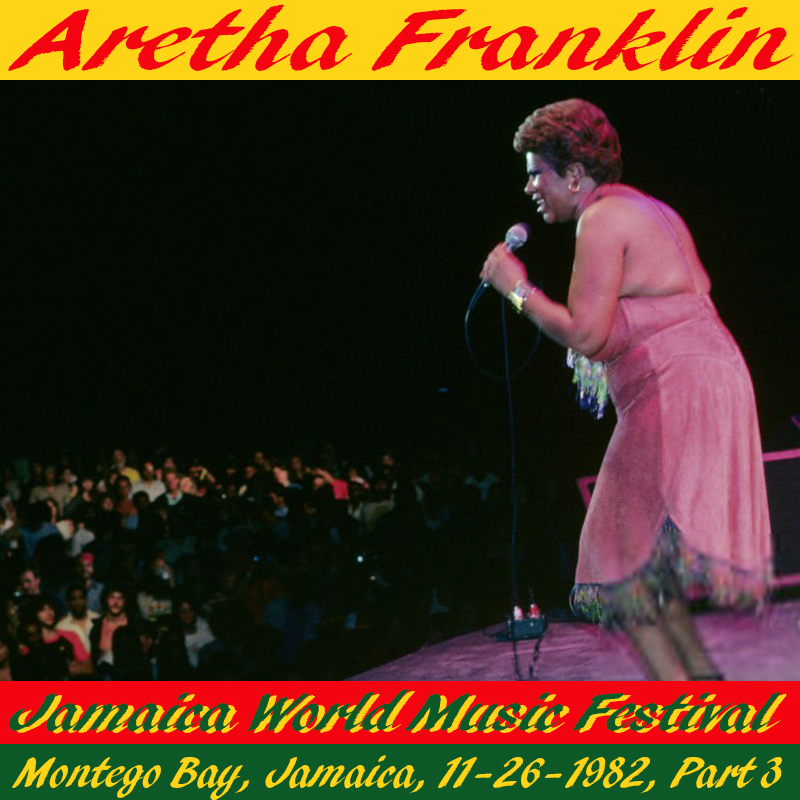
Aretha Franklin’s Jamaica World Music Festival Performance Remains One of the Greatest Forgotten Live Broadcasts of the Modern Era as Live Jam Spotlights a Defining 1982 Masterclass in Soul Music History. There are legendary live albums, there are iconic concert films, and then there are performances that survive through collector culture almost like whispered mythology passed hand-to-hand between serious music fans for decades. Certain concerts exist outside traditional commercial history. They become discoveries. Artifacts. Time capsules preserved by radio recordings, underground tape trading communities, audiophile archivists, and obsessive listeners who understand they are hearing something too important to disappear. Aretha Franklin’s November 26, 1982 performance at the Jamaica World Music Festival belongs firmly inside that category.

For Live Jam, this is precisely the kind of historic performance that deserves renewed attention in 2026 because it captures more than just a great artist during a live set. It captures a transformational moment in American music history when one of the most important vocalists ever recorded was actively rebuilding her commercial dominance, redefining her sound for a new decade, and simultaneously carrying the emotional weight of deeply personal tragedy behind the scenes. The result is one of the most emotionally layered and musically compelling live recordings of the early 1980s — a performance that continues standing as essential listening for collectors, soul historians, vinyl enthusiasts, and serious live music audiences worldwide.
This week, Live Jam’s *Friday Night Lights Radio Show* shines a deserved spotlight on that historic recording with a special full-concert presentation airing every Friday night beginning at 9PM EST. Unlike traditional format-driven radio programming that slices legendary performances into isolated tracks or curated excerpts, *Friday Night Lights* is built around immersion. One complete live release. One uninterrupted experience. One opportunity to hear an artist exactly as audiences experienced them in the moment. That philosophy makes the Aretha Franklin Jamaica World Music Festival performance a perfect centerpiece because this concert was never intended to function as fragmented nostalgia. It was built to unfold emotionally, dynamically, and spiritually from beginning to end.
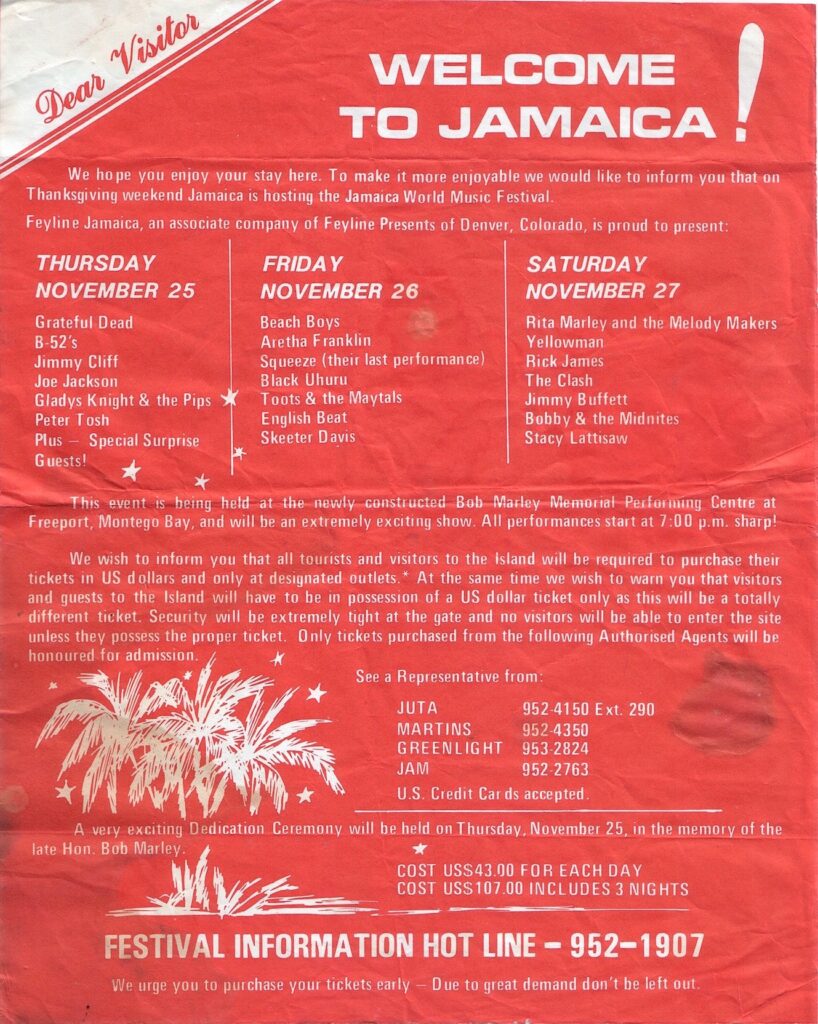
Recorded live at the Bob Marley Performing Arts Center in Montego Bay, Jamaica, Franklin’s appearance took place during one of the most fascinating festival gatherings of the era. The Jamaica World Music Festival itself represented a remarkable collision of genres, cultures, and global musical movements. Across three days, audiences witnessed a lineup that crossed reggae, punk, soul, rock, funk, R&B, and improvisational live music in ways that now feel almost impossible to replicate within modern festival culture. The presence of acts like The Clash, Grateful Dead, Rick James, and Black Uhuru alongside Aretha Franklin created an atmosphere that reflected a music industry still willing to embrace stylistic unpredictability and artistic diversity at the highest levels.
Within that environment, Franklin delivered a performance that perfectly balanced reinvention and legacy. The timing was especially significant because she had just released *Jump to It*, the Luther Vandross-produced album that reignited her commercial momentum and delivered her first Billboard R&B number-one hit in years. By 1982, the music industry itself was rapidly changing. MTV was reshaping artist visibility. Pop production aesthetics were evolving. New generations of listeners were entering the market with different sonic expectations. Many legacy artists struggled navigating that transition successfully. Aretha Franklin did not merely survive it. She recalibrated and reasserted herself with extraordinary intelligence.
The brilliance of *Jump to It* was not simply that it modernized Franklin’s sound. It preserved her authority while surrounding her voice with contemporary production energy that still respected the emotional gravity and vocal command that made her legendary in the first place. Luther Vandross understood exactly how to frame her power without diluting it. That chemistry carried directly into the Jamaica performance, where Franklin sounded revitalized, energized, and fiercely committed to proving that her artistry remained fully dominant entering the 1980s.
What makes the Jamaica recording particularly extraordinary is the audio quality itself. Captured through a live FM radio broadcast, the performance survives as one of the few full-length, soundboard-quality recordings of Franklin from this specific era. For collectors, that distinction matters enormously. So much of live music history from the period survives through distant audience tapes, incomplete recordings, or heavily degraded bootlegs. This concert is different. The clarity of the broadcast preserves the nuance of Franklin’s phrasing, the dynamics of the band, the emotional pacing of the setlist, and the sheer physical force of her voice with startling immediacy.
That sonic preservation is precisely why the recording became such an important cornerstone within collector communities. Over time, the broadcast circulated through underground tape trading circles before eventually becoming a major source for various retrospective releases and vinyl editions that helped expose newer audiences to the performance. Long before streaming algorithms attempted to dictate listening habits, recordings like this spread because fans themselves recognized their importance and actively preserved them.
The setlist itself tells a larger story about Franklin’s artistic positioning during this period. Rather than leaning exclusively on her most obvious classics, the performance balances new material, reinterpretations, deep soul tradition, and signature hits with remarkable intelligence. Opening with “Hold On, I’m Comin’,” originally popularized by Sam & Dave, Franklin immediately established the night’s blend of power, groove, and emotional authority. Throughout the set, she moved seamlessly between contemporary material and songs deeply embedded within her legacy while maintaining total command of the audience dynamic.
Performances of “Love Me Forever,” “It’s Your Thing,” and “I Wanna Make It Up to You” reflected the contemporary R&B direction she was embracing during the era, while the “Golden Moments” medley created one of the night’s defining stretches. Songs like “Day Dreaming,” “Rock Steady,” and “I Say a Little Prayer” reminded audiences that Franklin’s catalog was not simply influential — it was foundational to the emotional architecture of modern soul music itself.
Then came “Respect.”
Few songs in music history carry the cultural gravity of Franklin’s interpretation of the Otis Redding classic. By 1982, “Respect” had already transcended standard hit-song status to become something larger: a declaration of identity, empowerment, authority, and social transformation. Yet even years after its release, Franklin still delivered the song with genuine intensity rather than autopilot nostalgia. That distinction separates true legends from artists merely replaying their catalog. Franklin attacked songs emotionally every time she performed them, which is why her live recordings continue feeling alive decades later.
Still, perhaps the most emotionally overwhelming moments of the Jamaica performance arrive during “Ain’t No Way” and “Jump to It.” Collectors and historians continue citing those performances as among the strongest examples of Franklin’s early-1980s touring power because they capture both technical brilliance and emotional vulnerability simultaneously. Her vocal runs remain astonishingly precise while still sounding entirely human, spontaneous, and emotionally raw.
That emotional undercurrent becomes even more profound when understanding the personal circumstances surrounding the performance itself. At the time of the festival, Franklin was carrying immense emotional pain privately. Her father, the influential preacher and civil rights activist C.L. Franklin, remained in a coma following a tragic shooting during an armed robbery at his home. The trauma surrounding that situation understandably impacted Franklin deeply, and some observers have noted moments throughout the concert where traces of emotional exhaustion seem to surface beneath the professionalism and power of the performance.
Yet that reality ultimately makes the recording even more extraordinary. Live music has always been at its most transcendent when artists channel real human experience directly into performance. Franklin did not arrive in Jamaica insulated from grief or difficulty. She arrived carrying enormous emotional weight while still delivering a performance filled with strength, discipline, generosity, and astonishing vocal control. That humanity is embedded inside every note of the recording.
For Live Jam, this is exactly why preserving and spotlighting historic live performances matters so deeply. Live recordings are not merely entertainment products. They are emotional documents. Historical evidence. Cultural preservation. They capture artists in motion rather than frozen mythology. They preserve imperfections, spontaneity, crowd energy, emotional risk, and the unpredictable electricity that only truly great live music can create.
That same philosophy defines the mission behind *Friday Night Lights Radio Show*. Every Friday night at 9PM EST, audiences are invited into complete live experiences that deserve deeper appreciation than modern playlist culture typically allows. In an era increasingly dominated by shortened attention spans, algorithm-driven skipping behavior, and fragmented listening, the act of sitting with a complete live performance from beginning to end becomes almost radical again. It restores context. Narrative. Emotional pacing. Musical tension and release. It reminds listeners how transformative live albums and broadcasts were always meant to function.
The Aretha Franklin Jamaica World Music Festival performance exemplifies that perfectly because the emotional impact builds progressively throughout the set. The audience hears Franklin moving through celebration, authority, vulnerability, groove, improvisation, memory, and release in real time. It becomes less like listening to isolated songs and more like entering the emotional architecture of a singular artist navigating one of the most fascinating periods of her career.
The historical importance of the recording has only grown stronger with time because contemporary audiences increasingly recognize how rare artists like Aretha Franklin truly were. Modern music culture still produces stars, but voices capable of carrying the emotional and technical force Franklin possessed remain extraordinarily uncommon. Her ability to move between gospel intensity, soul phrasing, pop accessibility, jazz flexibility, and raw emotional storytelling remains virtually unmatched.
More importantly, Franklin represented a generation of performers whose live abilities were never separate from their recorded legacy. There was no artificial distinction between studio artist and stage artist. The concert stage was where legends proved themselves nightly. That standard matters deeply within Live Jam culture because the greatest live recordings are never simply reproductions of studio tracks. They become reinterpretations, expansions, confrontations, and emotional conversations between artist and audience.
That spirit remains fully alive inside the Jamaica World Music Festival recording. More than four decades later, the performance still sounds immediate, vibrant, emotionally charged, and musically fearless. It remains one of the defining preserved broadcasts from a critical transition period in Franklin’s career and one of the most rewarding deep-listening experiences available to serious soul music audiences today.
This Friday night, Live Jam brings that experience back to center stage exactly where it belongs.