Guns N’ Roses news, November 20, 2026
Gibson and Duff McKagan launch a worldwide search for his long-lost first bass, a Cherry Red EB-0
The Guns N’ Roses bassist bought it with paper-route money as a Seattle kid, put a Black Flag sticker on it, and lost track of it in the chaos of 1980s Hollywood.
- The bass
- Cherry Red Gibson EB-0, missing since the mid-1980s
- Send tips to
- tips@duffmckagan.com
- Watch
- The new video interview, below
Duff McKagan has played some of the most recognizable bass lines in hard rock, but the instrument he says started it all is gone. Gibson is now helping the Guns N’ Roses founding member look for his first bass guitar, a Cherry Red Gibson EB-0 that disappeared in the mid-1980s and has not been seen since.
The search is built around a new video interview in which McKagan tells the story of the bass, and fans who know anything about where it ended up are being asked to send tips directly to tips@duffmckagan.com.
A paper route, a Gibson and a Black Flag sticker
McKagan grew up in Seattle, where music became an obsession early. He was surrounded by his older siblings’ record collections and inspired by everyone from local garage-rock pioneers the Sonics to the emerging punk movement, and he dreamed of finding a place in it. The dream turned real when he saved up enough from a paper route to buy a used Gibson EB-0.
“I had a paper route,” McKagan recalls. “My first bass was a Gibson Cherry EB-0. I paid for it in installments with my paper route money.” In an earlier Guitar World Q&A he described the same purchase a little differently, saying he was 13, saved the $100 he needed and bought the bass from a kid he knew, so the exact terms depend on which telling you read.
Either way, the bass became his constant companion through his formative years. It went with him as he discovered punk rock, formed his first bands, wrote songs and played around Seattle’s underground scene, and it was also the instrument that introduced him to Black Flag, whose music left a lasting mark. “That My War record got me through shit,” McKagan says. “I felt good about putting that Black Flag sticker on my bass.”
Long before arenas and stadiums, the Cherry Red EB-0 was there for rehearsals, local gigs and the earliest chapters of his career. McKagan credits it with shaping the aggressive attack and melodic style that later became one of the defining sounds of Guns N’ Roses. “The approach that I still have; it was born from playing that thing,” he explains. “I learned to attack playing that bass.”
How it disappeared
In 1984, McKagan moved to Los Angeles to pursue music full-time, and he brought the bass with him. Then came the whirlwind. The band that became Guns N’ Roses came together, signed a deal and recorded Appetite for Destruction, rising from Hollywood clubs to international stages in a very short time, and somewhere in the middle of it the instrument vanished.
“My Gibson EB-0 was my bass at home,” McKagan says. “In that whole chaos of us getting signed and making Appetite, the bass just disappeared. It must have gotten misplaced. Hollywood was nuts at that point. I have no idea what happened to it.” Gibson notes that nearly four decades have passed since, and that the search is meant to share the story widely enough to reunite him with the instrument that started it all.
Watch the interview
Gibson published the video interview with McKagan alongside the announcement. In it he looks back at growing up in Seattle and at what the bass meant to him. It is embedded below.
If the player does not load, watch the interview on YouTube.
What a Gibson EB-0 is
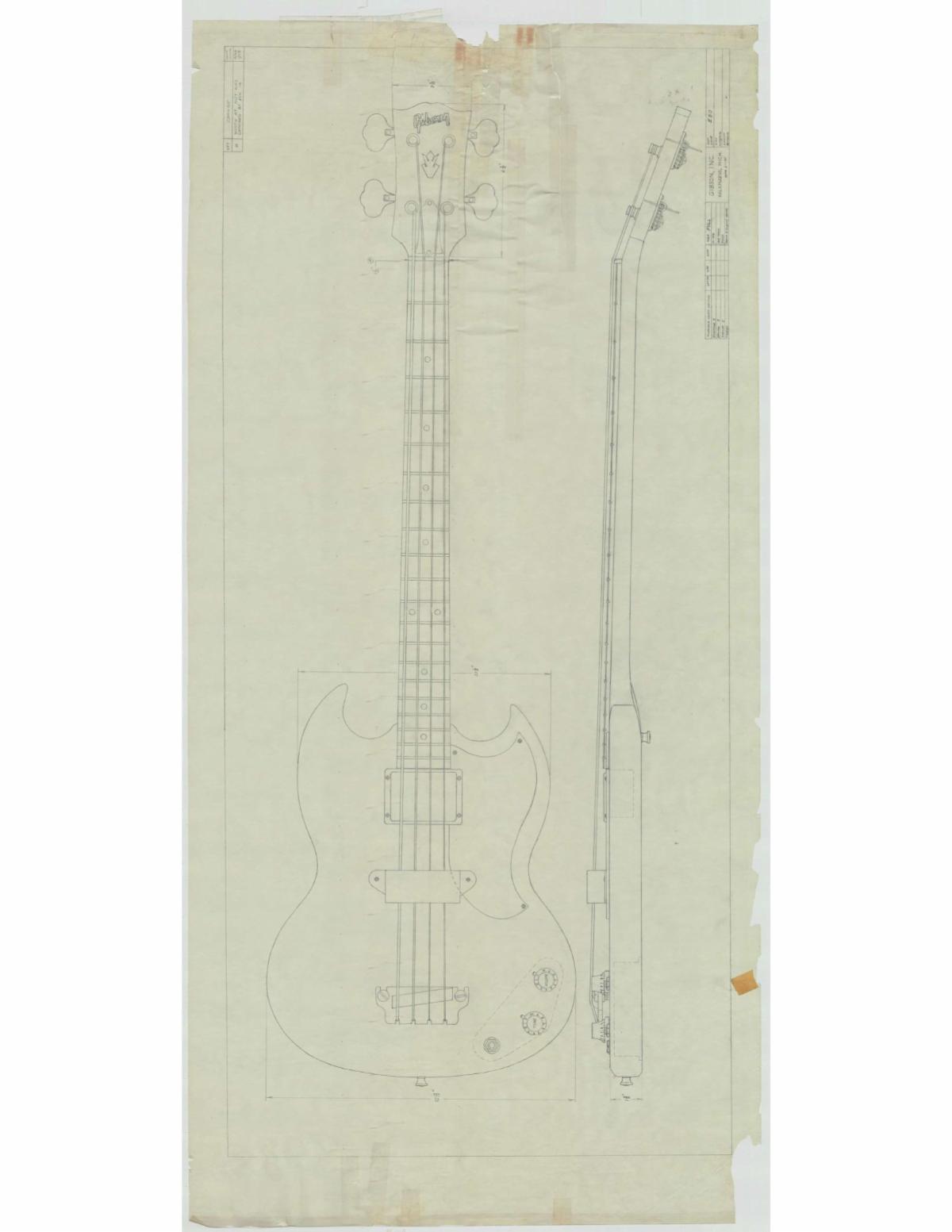
Gibson introduced the EB-0 in 1959 as a response to the declining sales of its earlier EB-1. The first version had a double-cutaway slab body styled after the Les Paul Junior, in mahogany with a 30.5-inch scale and cherry red as the only finish. Vintage dealers say only about 500 of those original slab-body basses were sold before the model changed in 1961.
That year the body was redesigned in the SG style, with the thin, sculpted double-cutaway shape with pointed horns that most players picture when they think of the model, and the EB-0 stayed in production until 1979. Wikipedia counts 20,844 built in all. Gibson’s announcement names Jack Bruce of Cream, Dennis Dunaway of Alice Cooper and Mike Watt of Minutemen among its players, and Dunaway’s spray-painted metallic green EB-0 is known as “The Frog.” Gibson’s own history of the EB-0 also runs through Kiss, since the Gibson Custom Shop’s 2023 Gene Simmons EB-0 was based on a heavily modified 1959 model.
For McKagan it is more than a vintage bass. Gibson describes it as the moment music became real for him, the bass he played while discovering punk rock, starting his first bands, opening for Black Flag and building the approach he still carries. “It turned imagination into possibility,” he says. “It made me think, ‘This is possible.’”
How to help
Whether the bass is sitting in a private collection, hanging on a wall, packed away in storage or resting forgotten under a bed, the worldwide search is on. Anyone with information about Duff McKagan’s original Cherry Red Gibson EB-0 can email tips@duffmckagan.com or visit duffmckagan.com.
About Duff McKagan
McKagan is a rock musician, singer, songwriter and author, best known as a founding member of Guns N’ Roses. Born and raised in Seattle, he came up in the Pacific Northwest punk scene of the late 1970s and early 1980s, playing bass, guitar and drums with local acts including the Fastbacks and 10 Minute Warning. After relocating to Los Angeles he joined Guns N’ Roses in 1985, bringing a raw punk edge to the band’s blues-infused hard rock. The band’s landmark albums include Appetite for Destruction in 1987 and Use Your Illusion I and II in 1991, and McKagan was inducted into the Rock and Roll Hall of Fame in 2012.
His career has run well beyond that band. He fronts his own group, Duff McKagan’s Loaded, and co-founded the Grammy-winning supergroup Velvet Revolver with Slash, Matt Sorum and Scott Weiland. He has also been part of Neurotic Outsiders and Walking Papers, worked as a session musician and writer for artists including Ozzy Osbourne and Iggy Pop, and released the solo albums Believe in Me in 1993, Tenderness in 2019 and Lighthouse in 2023, before rejoining Guns N’ Roses in 2016 for their record-breaking stadium tours. Away from the stage he studied at Seattle University’s Albers School of Business and Economics, has written New York Times bestselling memoirs, and has written columns on music, sports and finance for outlets including Seattle Weekly, Playboy and ESPN. He is also an advocate for artist financial literacy and mental health.
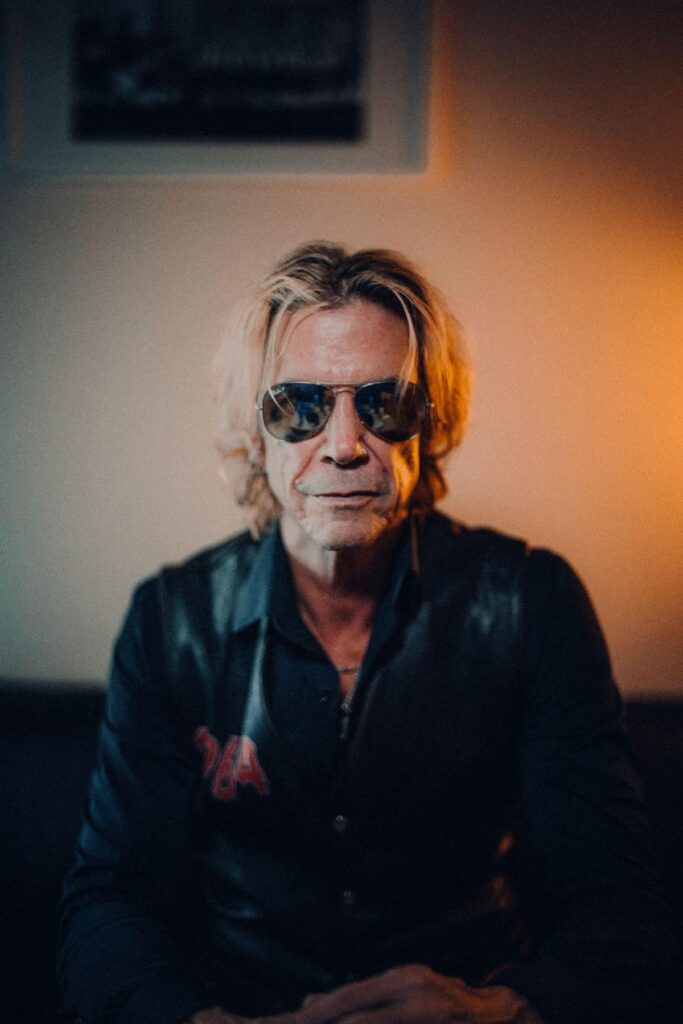
Photo credit: Luke Shadrick. Original sketch of the Gibson EB-0 courtesy of Gibson.
Details are as announced by Gibson and Duff McKagan on November 20, 2026. Send any tips to tips@duffmckagan.com.