There are artists who leave behind hit records, there are artists who leave behind influence, and then there are artists whose work becomes so expansive, so intellectually demanding, and so endlessly dissectible that their catalog transforms into an ongoing field of study long after they are gone. Frank Zappa belongs firmly in that final category. Decades after his passing, the Zappa universe continues operating less like a traditional legacy catalog and more like a living archival ecosystem — one powered by obsessive listeners, audiophile historians, musicians, tape archivists, scholars, collectors, and live-performance devotees who understand that Zappa’s work was never designed for passive listening.
For Live Jam, that distinction matters enormously because no major artist in modern music history approached live performance quite the way Frank Zappa did. Concerts were laboratories. Touring bands functioned like elite-level conservatories under relentless pressure. Improvisation collided with impossible rhythmic structures. Comedy existed beside orchestral complexity. Jazz fusion exploded into hard rock. Avant-garde composition merged with satire, political commentary, and technical musicianship so demanding that even world-class players often struggled surviving auditions.
That legacy remains fully alive every Tuesday night through Don Plays Live Zappa, the marathon Live Jam broadcast experience delivering five uninterrupted hours of live Zappa beginning at 10PM EST. More than just another specialty radio block, the program has become a destination for serious music audiences who recognize that Zappa’s live recordings represent one of the richest archival treasures in the history of recorded performance. Every era sounds different. Every band lineup reshaped the material. Every tour introduced new improvisational pathways, rhythmic structures, guitar explorations, and compositional experiments that continue astonishing listeners decades later.
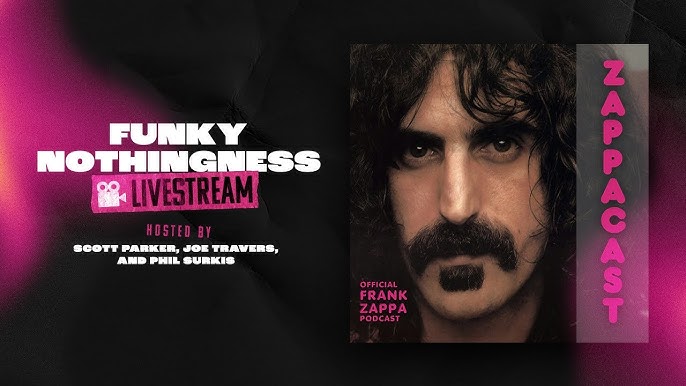
What makes the Zappa live universe especially compelling in 2026 is the extraordinary depth of archival work still unfolding through the official Zappa organization and the increasingly respected ZappaCast, the official Frank Zappa podcast that has quietly become one of the most important long-form music-analysis programs operating anywhere today. Established in 2011, the series was never conceived as surface-level nostalgia programming. Instead, it functions as a sophisticated deep-dive exploration into the mechanics, recordings, history, restoration, preservation, and musical architecture behind one of the most complex catalogs in modern music.
The importance of ZappaCast cannot be overstated because it reflects something increasingly rare within contemporary music culture: serious analytical engagement with live performance history. While many artist-centered podcasts settle for lightweight anecdotes or simplified retrospectives, ZappaCast approaches the material with the seriousness of a historical preservation project. The show exists not merely to celebrate Frank Zappa, but to actively document and explain how the music itself was created, performed, rehearsed, recorded, archived, and restored.
At the center of that mission is Scott Parker, the creator and primary host whose extensive work chronicling Zappa’s touring history and discography helped establish him as one of the most respected voices within the collector and archival community. Parker’s approach to the material reflects the mindset of a true historian rather than a casual fan commentator. Episodes routinely dissect recording sessions, tour timelines, alternate arrangements, equipment details, band personnel shifts, and performance evolution with a level of detail rarely found in mainstream music media.
Yet the true secret weapon behind the podcast — and arguably behind the entire modern Zappa archival renaissance — is Joe “Vaultmeister” Travers. Few positions in music history carry the mythological weight of Travers’ role because he is literally the keeper of Frank Zappa’s physical audio vault. That vault itself has become legendary among collectors, containing an enormous universe of master tapes, live recordings, rehearsal sessions, alternate takes, unreleased performances, studio experiments, and historical recordings spanning decades of relentless creativity.
Travers’ work goes far beyond curation. He actively restores, organizes, analyzes, and prepares archival recordings for the increasingly ambitious box sets and anniversary editions released through the Zappa organization. His participation in ZappaCast transforms the show into something uniquely authoritative because discussions about recordings are coming directly from the individual physically handling the original tapes themselves. That proximity to the source material gives the series enormous historical value.
Alongside producer Phil Surkis and recurring co-host Bill Harrington, the ZappaCast team has built a platform that treats music history with extraordinary depth and seriousness while still remaining accessible and entertaining for audiences willing to dive deeply into the material. The result is less like a traditional podcast and more like a rolling audio documentary series chronicling one of the most demanding and misunderstood catalogs ever created.
One of the show’s most fascinating recurring themes involves the evolution of Zappa’s drummers — a subject that becomes absolutely essential when attempting to understand the structural complexity of the music itself. Frank Zappa’s compositions demanded rhythmic precision so extreme that many musicians considered his band among the most difficult gigs in the industry. Time signatures shifted unpredictably. Compositions could pivot instantly between genres. Improvised sections required players capable of following Zappa’s cues in real time while maintaining astonishing technical accuracy.
As a result, the drummer’s chair inside the Zappa universe became almost mythical. The podcast’s deep examinations of players like Terry Bozzio, Vinnie Colaiuta, Chad Wackerman, and David Logeman reveal not only the staggering technical demands of the music, but also how each player fundamentally altered the personality of different touring eras.
Those lineup changes matter profoundly because Frank Zappa never treated his compositions as static museum pieces. Songs evolved constantly. Entire arrangements transformed from one tour to another. Solos expanded differently depending on personnel chemistry. Rhythmic feel shifted dramatically across decades. That constant reinvention is precisely why live Zappa recordings remain endlessly rewarding for collectors and scholars. No definitive version truly exists because the music itself was designed to remain in motion.
That philosophy aligns perfectly with the spirit behind Don Plays Live Zappa. The Live Jam program embraces the idea that the greatest live music experiences are not built around repetition, but around discovery. Every Tuesday night becomes an opportunity to enter another corner of the Zappa universe — whether through explosive 1970s jazz-fusion workouts, brutally precise 1980s ensemble arrangements, guitar-heavy improvisational marathons, orchestral experiments, or surreal genre collisions that could only exist inside Zappa’s imagination.
What separates Zappa from nearly every other major rock-era composer is that his catalog genuinely requires active listening. The music resists simplification. It challenges audiences rhythmically, harmonically, and conceptually. Yet beneath the complexity lies extraordinary humor, emotional unpredictability, social commentary, satire, and fearless experimentation. Zappa understood that technical precision without personality becomes sterile. His greatest bands achieved both simultaneously.
That duality is especially visible throughout the archival “Deep Dish” episodes of ZappaCast, which break down massive retrospective releases and anniversary box sets track by track. When projects tied to albums like Over-Nite Sensation or One Size Fits All are released, the podcast doesn’t merely promote them superficially. The hosts explain recording methodologies, studio decisions, alternate takes, unreleased arrangements, tape lineage, mixing choices, and the historical context surrounding the sessions themselves.
For serious listeners, these discussions become invaluable because Zappa’s catalog was always dense with detail. Tiny arrangement changes matter. Personnel substitutions matter. Improvised transitions matter. The difference between one live version and another can completely reshape the emotional or structural impact of a composition. That level of nuance is precisely why the archival community surrounding Zappa remains among the most dedicated and intellectually engaged in all of music culture.
The podcast’s interviews with former Mothers of Invention members and touring musicians add another extraordinary layer to that preservation effort. Stories about Zappa’s audition processes, rehearsal methods, compositional expectations, and perfectionism have become legendary throughout the industry. Musicians routinely describe rehearsals as mentally and physically exhausting experiences requiring near-constant concentration. Yet those same musicians almost universally speak about the experience with reverence because surviving a Zappa band effectively became a certification of elite-level musicianship.
That culture of discipline directly shaped the quality of the live recordings audiences still obsess over today. Unlike many touring acts whose concerts relied heavily on spectacle or looseness, Zappa’s performances balanced improvisational freedom with near-orchestral precision. The musicians had to navigate absurdly difficult written material while remaining flexible enough to follow Zappa into spontaneous detours, extended solos, comedic interruptions, or sudden arrangement shifts.
The result was a body of live work unlike anything else in rock history. No other major artist generated such a vast archive of high-level recordings across so many radically different stylistic periods while maintaining such a consistent standard of technical excellence. That enormity is exactly why programs like Don Plays Live Zappa continue attracting audiences seeking something deeper than algorithm-fed passive listening.
In many ways, Zappa’s music feels even more relevant now than it did during certain points of his own lifetime because modern audiences are increasingly rediscovering the value of musicianship, archival preservation, vinyl culture, long-form listening, and complete live-performance immersion. Younger listeners exhausted by disposable streaming culture are beginning to seek recordings that demand attention rather than merely filling background noise. Zappa’s catalog offers almost infinite rewards for that type of listener.
For Live Jam, celebrating that world means celebrating the very best qualities of live music culture itself: unpredictability, virtuosity, experimentation, risk-taking, preservation, deep listening, and artistic fearlessness. The mission is not simply nostalgia. It is keeping the living energy of these performances active for modern audiences willing to engage with them fully.
Every Tuesday night at 10PM EST, Don Plays Live Zappa becomes another entry point into that endless musical universe. Five straight hours. No shortcuts. No watered-down summaries. Just the astonishing depth, chaos, brilliance, humor, precision, and improvisational fire that continue making Frank Zappa one of the most fascinating live-performance architects in the history of modern music.